For a long time, one of the most common pieces of advice in branding has been: find your niche.
Be specific.
Make it easy for people to understand what you do.
And strategically, there is a lot of truth in that. Clarity matters. If someone visits your website and leaves more confused than when they arrived, we probably have a communication problem.
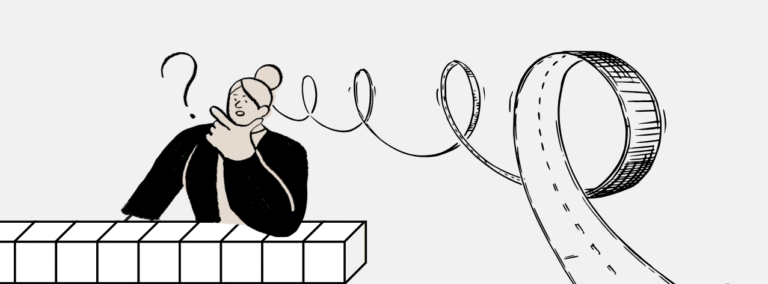
But what happens when the person behind the brand is genuinely multidisciplinary?
What if you are a designer who develops websites, a musician who understands business, an artist who writes, a strategist who loves technology, or a photographer who also teaches?
Do you have a branding problem?
I don’t think so.
I think we may have been trying to organize multidisciplinary people using a model that assumes people should be one thing.
The pressure to fit in
Multitalented people can have a particularly difficult relationship with personal branding.
You open LinkedIn and everyone seems to have a title.
Designer.
Developer.
Musician.
Writer.
Strategist.
Consultant.
Cool. Which one are you?
For someone whose interests naturally cross disciplines, answering that question can feel surprisingly uncomfortable.
Choose one and you feel like you’re hiding parts of yourself.
List everything and suddenly your bio looks like the menu of a very ambitious restaurant.
I’ve experienced this throughout my own career.
Design, development, strategy, marketing, business, music, art. These disciplines don’t feel disconnected when I’m doing them. They influence each other constantly.
But communicating them is another story.
And I don’t think I’m alone.
Our jobs are becoming multidisciplinary anyway
Interestingly, while personal branding keeps telling us to simplify ourselves, the professional world ask for multitask.
The value isn’t necessarily in mastering every discipline equally.
The value is in connecting them.
And this becomes even more obvious when we look at independent artists.
The independent artist is already a multitasker
Being an independent artist today rarely means just making art.
You might be writing a song in the morning, answering emails in the afternoon, editing a Reel at night, negotiating a performance, updating your website, sending an invoice, talking to a venue, researching grants and trying to remember the password for whatever platform you haven’t logged into for six months.
Somewhere in there, you’re also supposed to be an artist.
The connected world has created incredible opportunities for independent creators, but it has also created an enormous operational layer around creativity.
We became creators, producers, marketers, administrators and entrepreneurs at the same time.
And that creates an interesting problem.
The problem isn’t necessarily having too many interests.
The problem is trying to do all of them at once.
That distinction became important for me.
Multidisciplinary doesn’t have to mean unfocused
Over the years, I’ve had to understand how my different creative lives can coexist without constantly competing for my attention.
Music doesn’t have to defeat design.
Design doesn’t have to replace art.
Business doesn’t have to contaminate creativity.
And creativity doesn’t have to become a business every time I make something.
They can occupy different spaces, different priorities and, importantly, different cycles.
That realization helped me become more focused, not less multidisciplinary.
Instead of asking:
Which one of these things am I?
I started becoming more interested in:
What am I doing now, why am I doing it, and what does success look like for this particular cycle?
That thinking eventually became part of a larger framework I’ve been developing for independent artists.
I call it the 4 Ps of the Artist.
The 4 Ps of the Artist
The framework is organized around four areas:
Protagonist
Plan
Production
Promotion
I’m intentionally not going deep into each one here. Each deserves its own conversation, and I’ll explore them individually in upcoming articles.
But the basic idea is simple.
Your artistic career doesn’t begin with your product.
It begins with you.
Protagonist
Before asking what you’re going to produce or how you’re going to market yourself, there is a person at the centre of everything.
Your story.
Your talents.
Your personality.
Your motivations.
Your definition of success.
Your relationships.
Your emotional life.
And yes, even therapy.
Understanding yourself changes the decisions you make about your career.
For a multidisciplinary person, this is especially important because your identity cannot always be reduced to the thing you’re currently producing.
You are the protagonist. The disciplines are part of your expression.
Plan
Once you understand the protagonist a little better, you can make decisions about direction.
What deserves your attention now?
What doesn’t?
What resources do you have?
What audience are you trying to reach?
And one concept I’ve become increasingly interested in here is cycles.
If you defined what success means in the previous stage, planning should help you create a cycle where that definition can actually be pursued and eventually closed.
Not everything needs to grow forever.
A record can have a cycle.
A website can have a cycle.
A content series can have a cycle.
A business experiment can have a cycle.
A creative career can contain hundreds of them.
Defining and closing cycles gives multidisciplinary people permission to focus without feeling like they’re abandoning the rest of themselves.
Production
Production is where intention becomes something real.
The work.
The process.
The collaboration.
The tools.
The systems.
The deadlines.
The infrastructure required to make the idea exist.
This is also where you start defining the stack that supports the project.
Maybe that’s a project management tool, a ticketing platform, a website, a content system, content pillars or whatever combination your particular project requires.
The stack should serve the work, not become the work.
Promotion
And then you have to operate the machine.
Promotion isn’t simply posting something on Instagram after you’ve finished creating it.
It’s the ongoing operation of the ecosystem you built.
Tasks need to move.
Content needs to circulate.
Partners need information.
Tickets need to sell.
Websites need updates.
Opportunities need follow ups.
Results need to be observed.
This is often the stage where independent work begins involving more people. Partners, collaborators, agents, marketers, designers, publicists or a larger team can start operating different parts of the system with you.
A tool such as Trello or another task manager isn’t the strategy itself. It’s part of the machinery that helps people actually operate the strategy consistently.
And suddenly, promotion looks much bigger than “marketing.”
It’s circulation.
The framework changed how I look at my own work
The 4 Ps didn’t make me less multidisciplinary.
They helped me stop demanding that every part of myself be active at the same intensity, at the same time.
That’s a very different thing.
I can be a musician without releasing music every month.
I can be a designer while writing.
I can build websites and still think like an artist.
I can spend a cycle deeply involved with one project and then consciously close it and redirect my energy somewhere else.
The coherence doesn’t necessarily come from doing the same thing repeatedly.
It can come from the Protagonist moving through different expressions intentionally.
And I think this distinction matters for personal branding too.
Maybe your brand doesn’t need a smaller you
When multidisciplinary people struggle with branding, our instinct is often subtraction.
Remove this.
Don’t talk about that.
Pick one audience.
Choose one title.
Simplify.
Sometimes that’s exactly the right strategic decision.
But sometimes we’re solving the wrong problem.
Maybe the problem isn’t that you’re doing too many things.
Maybe people simply can’t see the relationship between them yet.
That’s where branding becomes interesting.
Your job isn’t necessarily to make every output identical.
Your job is to help people recognize the person, worldview, values and intentions connecting those outputs.
A multidisciplinary career becomes confusing when we try to organize it around outputs instead of the person producing them.
Once you put the protagonist back in the centre, something changes.
The question stops being:
“What box do I fit into?”
And becomes:
“What connects the things I choose to put into the world?”
Don’t eliminate the complexity. Give it structure.
I’m still exploring this myself.
The 4 Ps are part of a larger body of work I’ve been developing around independent artistic careers and something that will eventually become a book.
And maybe that’s appropriate.
Because a framework about creative careers probably shouldn’t pretend creative careers are predictable.
People change.
Priorities change.
Technology changes.
Culture changes.
Success changes.
We open cycles and close them.
We discover new disciplines.
We return to old ones.
Sometimes one of our talents becomes a career. Sometimes it becomes therapy. Sometimes it becomes a side project. Sometimes, years later, it unexpectedly connects with everything else.
Being multidisciplinary isn’t necessarily something you need to fix in your brand.
You may simply need a better way to understand it, organize it and communicate it.
Your many disciplines aren’t necessarily competing identities.
They might just be different things the same protagonist has to say.